First I wanted to talk about my experience so far with storyboard/comics.
I have done narrative/story board studies before starting the course.
It was part of my own personal growth, I had watched something which a course/class/you tube, it’s a while back I cannot remember (yet).
I remember seeing the “I’m your father” story board broken down and explained and why it is good to study and create story boards of television.
1. learning composition – I think this was a major one at the time for me.
2. Story pacing / camera angles.
3. Best way to learn how to create my own graphic novel/webtoon. – which was/still is something I’m interested in.
In fact I think still have these easy Sketches
(Please note this is Pre-OCA – so will cite myself and not applied to my course work)
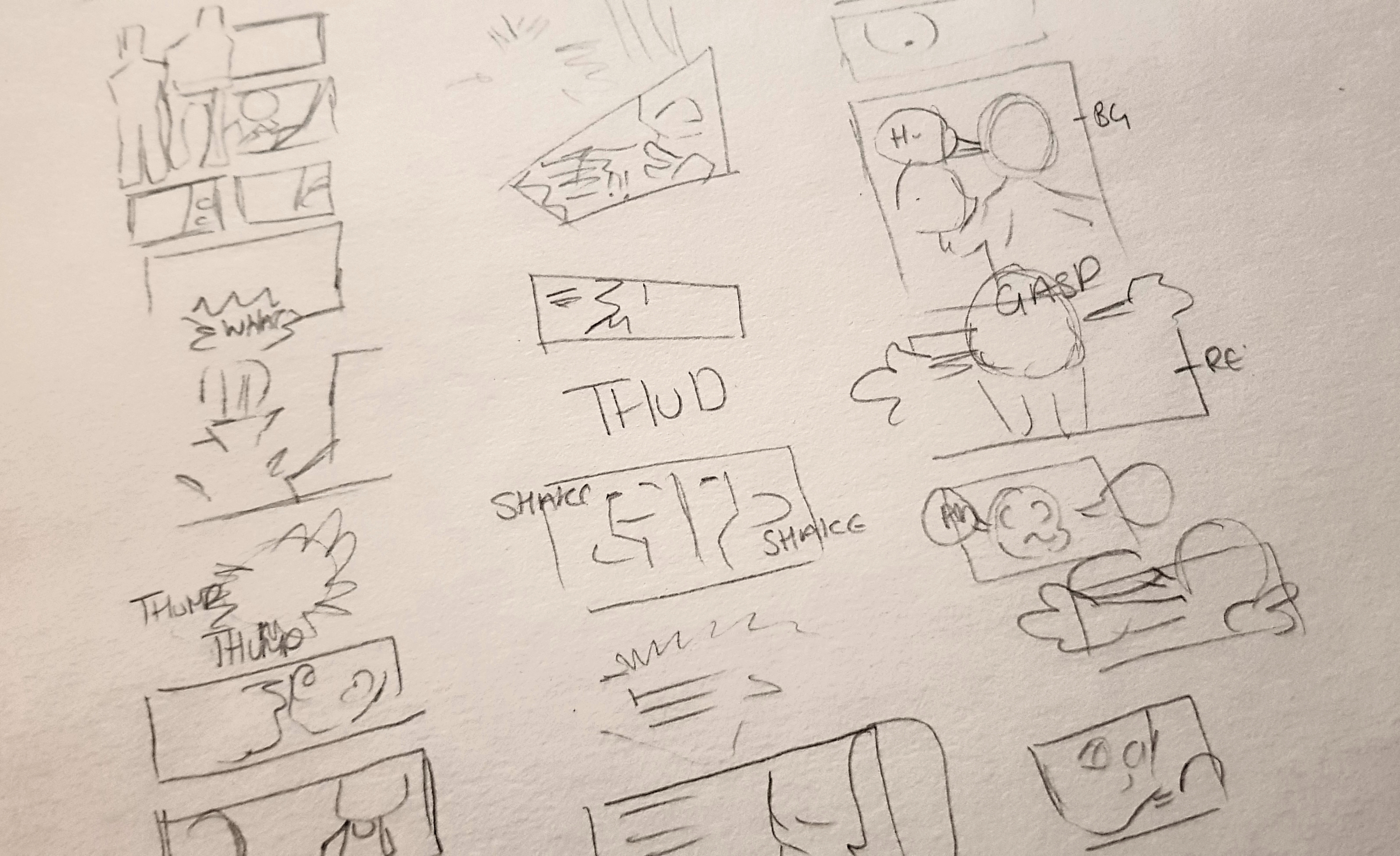
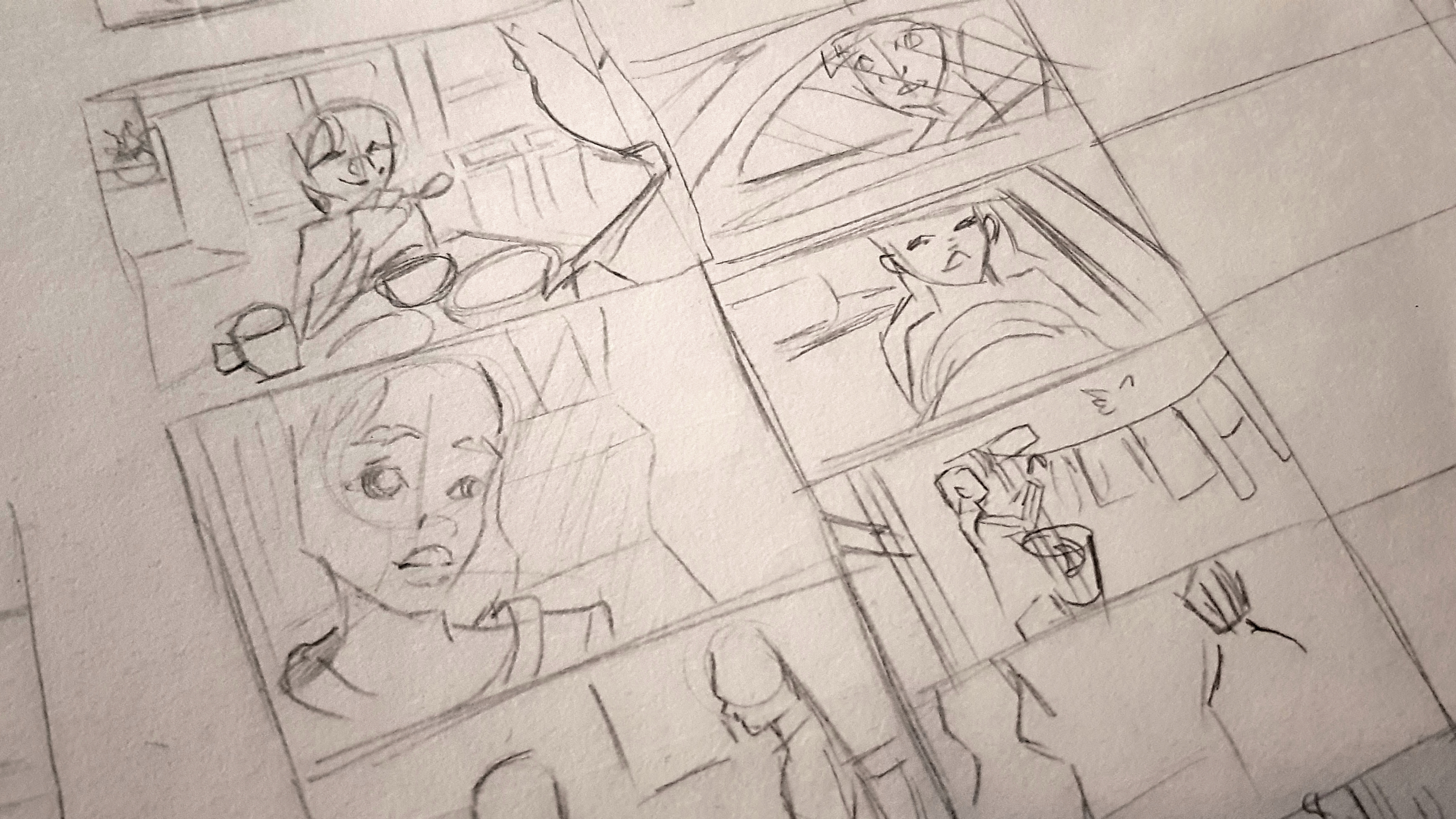
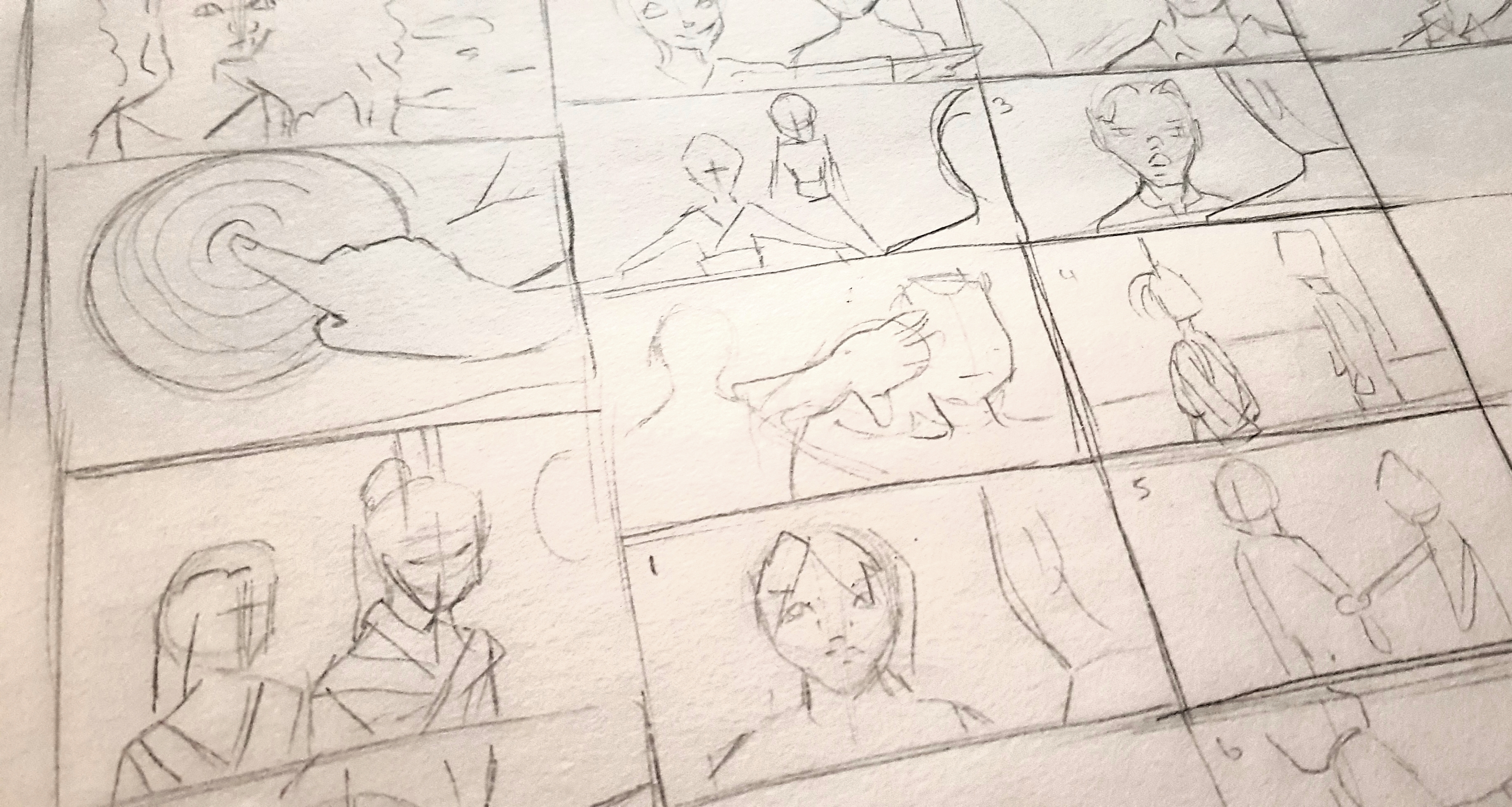
Emma Clements – 2016/17
Back then I think it was more about composition and the layout studies over the narrative, so it will interesting to see this element being studied.
I am also currently reading Understanding Comics – By Scott McCloud.
I think this was important for me to read, as he states what is the differences between motion pictures and comics (story boards I think land somewhere in the middle of the two personally) – not that a HUGE different as he does state motion pictures could be a VERY slow comic.
I can see how story board is the “perfect” way to learn.
Brandon J Wallace
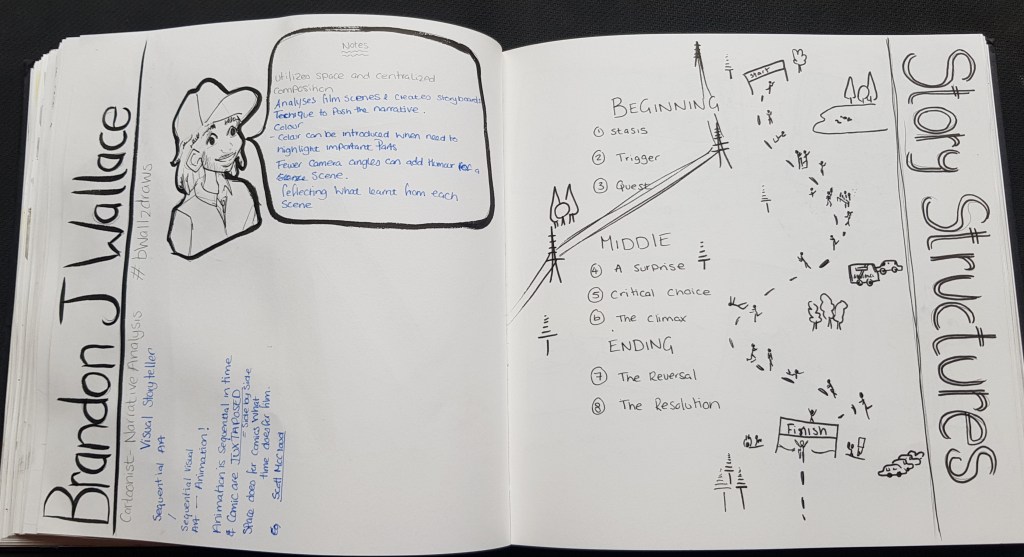
Cartoonist
I found it very interesting to read the information with each of his post on Instagram.
The way he thinks about this can help not just this research task, but improving my own visual language, help me to word and learn how to expend upon the things I research.
Giving me insight into looking at an image beyond a “feeling” but explaining the impact and reasoning.
Such as using a colour or pacing to create tension within the story board, the way they use colour/shadow to make the viewer feel things.
While the study on Brandon J Wallace is heavy on his study on his storyboard and recreating I knew I wanted to learn more myself about story boards and even animation itself.
With this in mind I started collecting “Art of” books, which tend to have story boards and colour mood break downs (will also be handy for future inspiration food)
I’ve also gotten The Animator Survival Kit by Richard William – I felt this was something good for me to have on my bookshelf.
 Emclemmie OCA Sketchbooks